
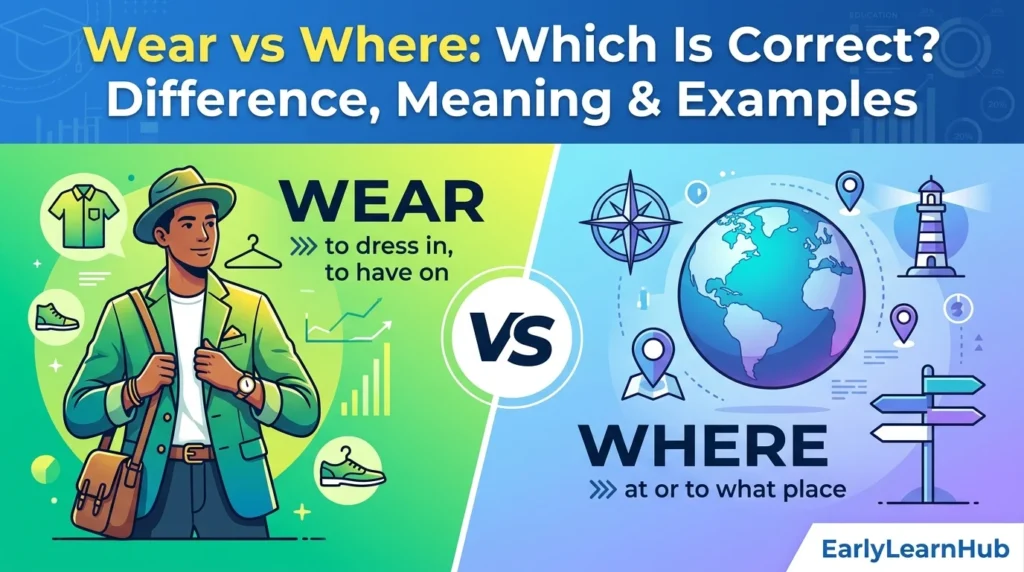
“Wear” and “where” sound the same in many English accents, but they have completely different meanings and uses. Wear is mainly used for clothing, accessories, or gradual damage from use, while where refers to a place, location, or position. Understanding the difference helps you avoid common spelling and grammar mistakes.
To clarify everyday preposition choices, learn the difference between In the Street or On the Street in natural English.
Is It Wear or Where?
Both wear and where are correct English words, but they cannot normally be used interchangeably.
Use wear when you are talking about putting clothing or accessories on your body, or when something becomes damaged through continued use.
Use where when you are asking about or referring to a place, location, position, or situation.
For example:
- What should I wear today?
- Where should we go today?
The first sentence is about clothing, while the second is about location.
What Does Wear Mean?
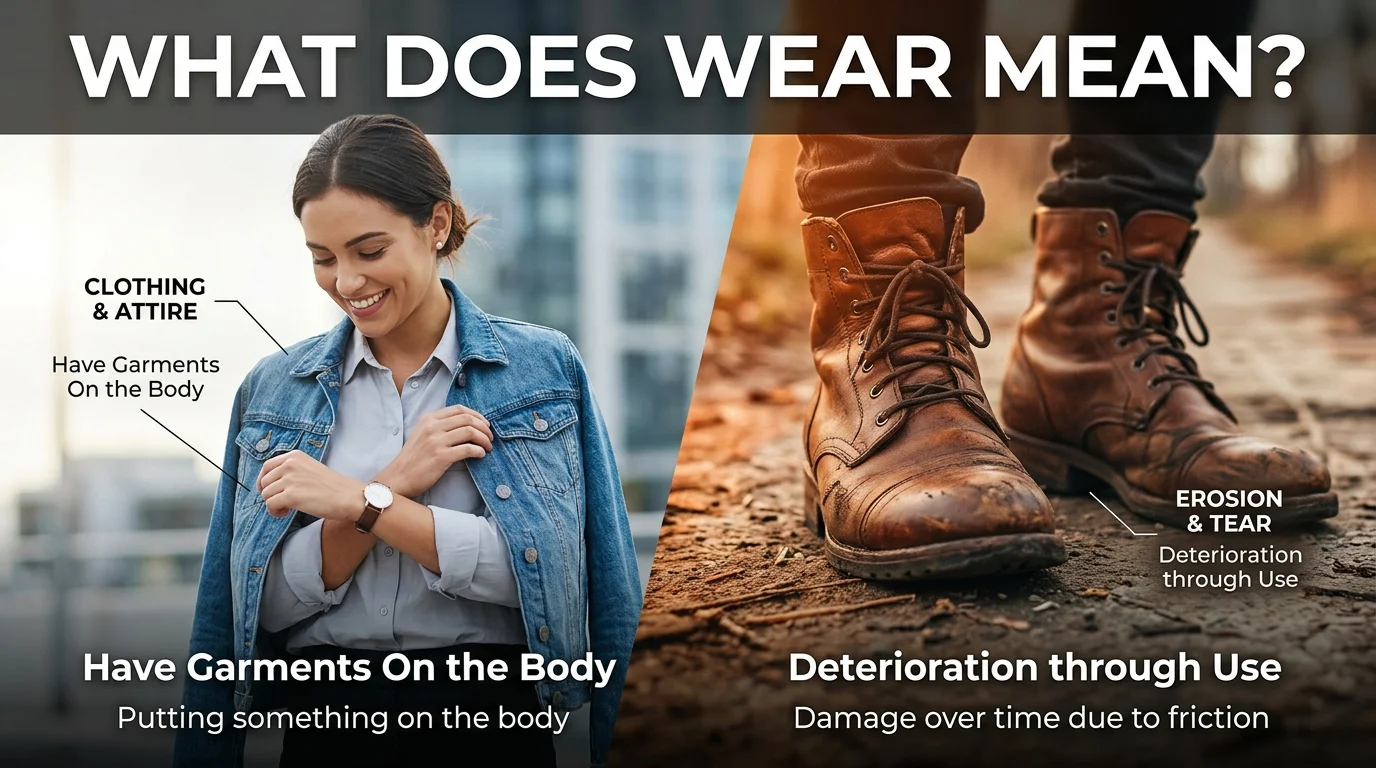
Wear is most commonly a verb meaning to have clothing, jewelry, glasses, shoes, or another item on your body.
Examples include:
- I wear glasses every day.
- She likes to wear blue dresses.
- He wears a watch to work.
- What are you going to wear tonight?
The verb also has another important meaning: to become damaged, weaker, or less effective because of continued use.
For example:
- These shoes wear out quickly.
- The carpet is beginning to wear.
- The machine has signs of wear.
“Wear” can also be a noun when referring to deterioration caused by use, as in wear and tear.
What Does Where Mean?
Where is generally used to ask about or identify a place, location, position, or situation.
Examples include:
- Where do you live?
- Where are my keys?
- Where did you park the car?
- Do you know where she works?
Where can also introduce a clause that identifies a place:
- This is the house where I grew up.
- I remember the restaurant where we first met.
Therefore, where is associated with location, not clothing.
What Is the Difference Between Wear and Where?
The main difference is their meaning and grammatical function.
| Word | Main Meaning | Typical Use | Example |
| Wear | To have clothing or an item on your body | Clothes, accessories, or deterioration | I wear glasses. |
| Where | A place or location | Asking or referring to a place | Where do you live? |
A simple rule is:
Wear = clothing or use
Where = place or location
This distinction remains the same even though the two words can sound identical when spoken.
Wear vs Where: Which Is Correct?
The correct word depends entirely on what you mean.
Use wear in sentences about clothing:
- What should I wear to the party?
- She decided to wear a red dress.
- I usually wear sneakers.
Use where in sentences about places:
- Where is the nearest store?
- Where did you put my phone?
- Do you know where they went?
Compare these two sentences:
What should I wear?
This asks about clothing.
Where should I go?
This asks about a destination or location.
Both words are correct, but their meanings are different.
To avoid a common verb mistake, learn the difference between Chose vs Choose and understand when each form is correct.
Wear Meaning and Usage
The most common use of wear is connected with clothing and things placed on the body.
Wear Clothing or Accessories
You can wear:
- a shirt
- shoes
- a jacket
- a hat
- glasses
- jewelry
- a watch
- a uniform
Examples:
- I wear a uniform to school.
- She wears earrings every day.
- He is wearing a black jacket.
The common forms of the verb are:
- wear: present
- wore: past
- worn: past participle
Examples:
- I wear this jacket often.
- I wore it yesterday.
- I have worn it many times.
Wear as Gradual Damage

“Wear” can also describe deterioration caused by repeated use.
Examples:
- The tires are showing signs of wear.
- The carpet has suffered considerable wear.
- Constant use can wear the material down.
- These shoes will wear out eventually.
This meaning is especially common in the expression wear and tear, which refers to normal deterioration resulting from ordinary use.
Where Meaning and Usage
Where is primarily connected with place or location.
It can be used in direct questions:
- Where are you?
- Where is the bathroom?
- Where did you buy that shirt?
- Where should we meet?
It can also appear inside a larger sentence:
- I know where he lives.
- Tell me where you found it.
- This is the place where we met.
So, “where” does not necessarily have to begin a question. It can also connect a clause to information about a place.
Wear vs Where Examples
Here are some examples that show the difference clearly.
Examples With Wear
- I wear glasses when I read.
- What should I wear to the wedding?
- She wore a beautiful dress yesterday.
- He wears a uniform at work.
- These shoes are beginning to wear out.
- The floor shows signs of heavy wear.
Examples With Where
- Where do you live?
- Where are my shoes?
- Where did you buy that jacket?
- Do you know where she went?
- This is the store where I bought my phone.
- Tell me where you found the book.
Common Mistakes With Wear and Where
Because wear and where sound the same, writers sometimes choose the wrong spelling.
Mistake 1: Using Where for Clothing
Incorrect:
What should I where today?
Correct:
What should I wear today?
The sentence is about clothing, so wear is required.
Mistake 2: Using Wear for Location
Incorrect:
Wear did you put the keys?
Correct:
Where did you put the keys?
The sentence asks about a location, so where is correct.
Mistake 3: Confusing Wear With Where in Questions
Incorrect:
Wear are you going?
Correct:
Where are you going?
A useful clue is that where belongs to the group of question words such as what, when, why, and who.
How to Remember Wear vs Where
A simple memory trick can make the distinction easier.
Think of wear when you see something you can put on:
Wear = clothes
- wear a shirt
- wear shoes
- wear glasses
- wear a hat
Think of where when you are looking for a place:
Where = place
- Where is it?
- Where are you?
- Where did they go?
- Where should we meet?
Another useful approach is to ask yourself:
Am I talking about clothing or something being used?
Use wear.
Am I talking about a place or location?
Use where.
Are Wear and Where Pronounced the Same?
Yes. Wear and where are homophones because they have the same pronunciation but different spellings and meanings. In many standard English accents, both are pronounced approximately like “wair.”
Because their pronunciation does not reliably distinguish them, context is important.
For example:
- What should I wear?
- Where should I go?
When spoken, the words can sound the same, but their meanings make the intended word clear.
Wear vs Where vs Ware
There is a third word that is often included in this comparison: ware.
Ware generally refers to goods, products, or manufactured articles. It frequently appears in compound words such as hardware, software, kitchenware, cookware, silverware, and glassware.
| Word | Meaning | Example |
| Wear | Clothing or deterioration from use | I wear a jacket. |
| Where | Place or location | Where is the store? |
| Ware | Goods or products | The shop sells kitchenware. |
This gives you an easy three-word distinction:
Wear = clothing/use
Where = place
Ware = goods/products
When Should You Use Wear or Where?
Use wear when the sentence involves:
- Clothing
- Shoes
- Jewelry
- Glasses
- Accessories
- Having something on your body
- Damage caused by use
- Wearing something out
Use where when the sentence involves:
- A place
- A location
- A position
- A destination
- Asking where something is
- Referring to a place in a clause
For example:
- Wear your coat because it is cold.
- Where is your coat?
The first sentence concerns putting on clothing. The second concerns location.
Summary
Wear and where are both correct English words, but they have different meanings and uses.
Wear is mainly a verb related to having clothing or accessories on your body. It can also refer to deterioration caused by repeated use, as in wear and tear.
Where is used for places, locations, and positions. It commonly appears in questions such as “Where are you?” and in clauses such as “the place where we met.”
The easiest way to remember the difference is:
Wear = clothing or use
Where = place or location
If you also encounter ware, remember that it refers to goods or products, as in kitchenware or hardware.
Frequently Asked Questions
Is wear or where correct?
Both wear and where are correct words. Use wear for clothing, accessories, or deterioration through use. Use where for places and locations.
What is the difference between wear and where?
Wear relates mainly to clothing or use, while where refers to a place, location, or position.
Does wear mean clothing?
Yes. As a verb, wear commonly means to have clothing, jewelry, glasses, shoes, or another item on your body.
What does where mean?
Where refers to a place or location. It is commonly used to ask where something or someone is.
Are wear and where homophones?
Yes. Wear and where are homophones because they have different spellings and meanings but are pronounced the same in many standard English accents.
Is “What should I wear?” correct?
Yes. “What should I wear?” is correct because the sentence asks what clothing or accessories you should put on.
Is “Where should I go?” correct?
Yes. “Where should I go?” is correct because the sentence asks about a destination or location.
What is the difference between wear, where, and ware?
Wear relates to clothing or deterioration, where relates to location, and ware refers to goods or products.
Can wear be a noun?
Yes. As a noun, wear can refer to deterioration resulting from use, as in “The tires show signs of wear.”
How can I easily remember wear and where?
Remember wear = clothing and where = place. If you can put it on, think wear. If you are asking about a location, think where.

Ethan Richardson is an Educational Content Editor with more than 10 years of experience reviewing and developing educational materials for young learners. His expertise includes improving worksheet accuracy, readability, and instructional quality while ensuring learning resources meet modern educational standards.