
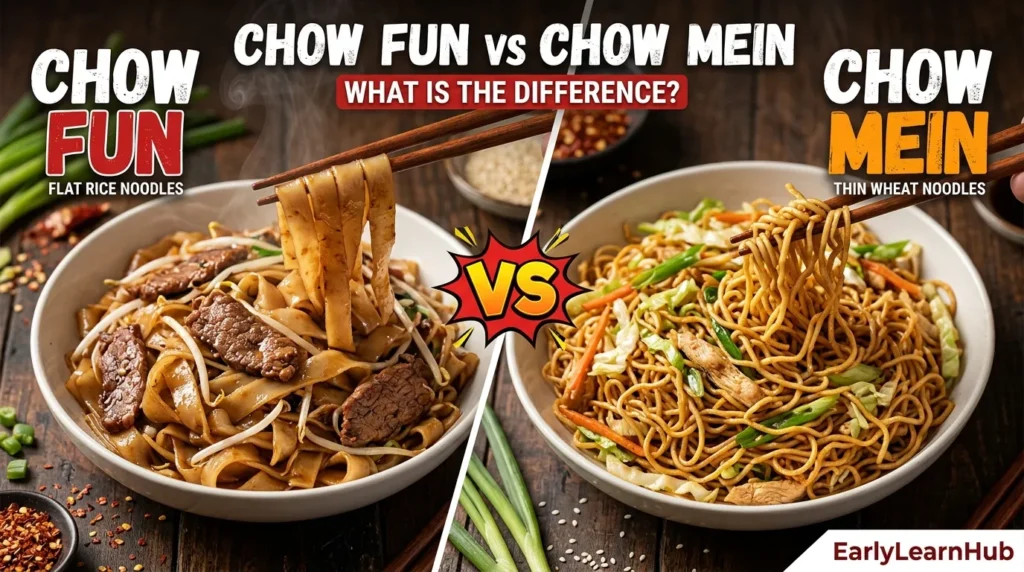
Chow fun and chow mein are two well-known Chinese noodle dishes that are often confused because both are prepared with savory sauces, vegetables, and stir-fried ingredients. However, they are different in their noodle types, textures, cooking methods, and traditional preparations. Chow fun features wide, flat rice noodles, while chow mein is generally made with thinner wheat-based noodles. Understanding their differences will help you recognize each dish and choose the one that best suits your taste.
What Is Chow Fun?
Chow fun is a traditional Cantonese noodle dish made with wide, flat rice noodles. These noodles are stir-fried with meat, seafood, vegetables, and seasonings to create a savory dish with a soft and chewy texture.
It is particularly popular in Guangdong, Hong Kong, and Cantonese restaurants worldwide. One of its best-known versions is beef chow fun, which combines wide rice noodles with sliced beef, bean sprouts, scallions, ginger, and soy sauce.
Chow fun is typically prepared over high heat in a wok. This cooking technique can create a smoky, slightly charred flavor known as wok hei, which means “breath of the wok.”
Read more about Then and Than meanings with practical examples to recognize their correct usage in everyday conversations, academic writing, and professional communication.
What Does Chow Fun Mean?
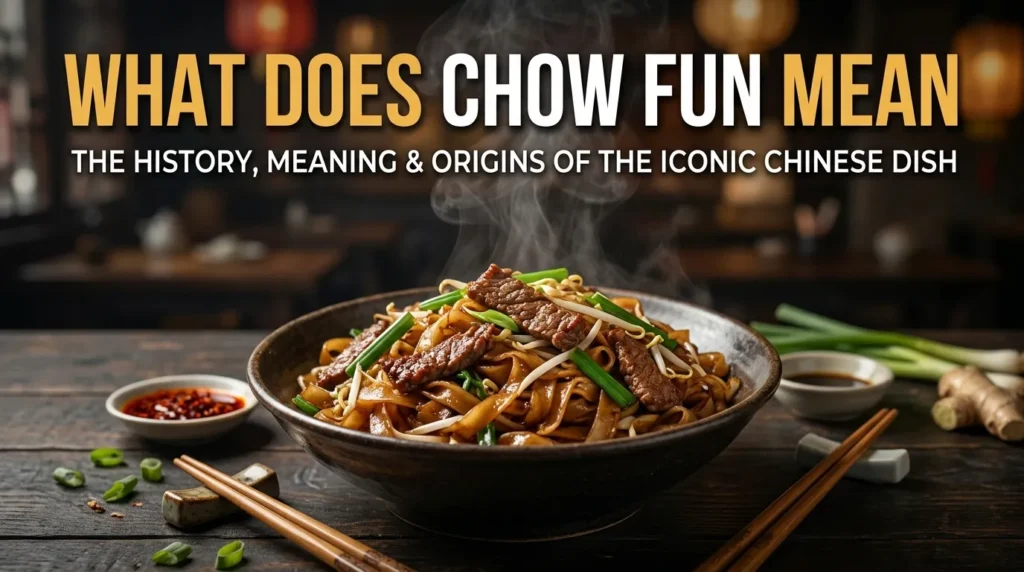
The name chow fun comes from Cantonese food terminology. The word “chow” refers to stir-frying, while “fun” refers to rice noodles.
Chow fun is also associated with ho fun or hor fun, which describes the broad, flat rice noodles used in the dish.
The name can appear in different forms on restaurant menus, including:
- Chow fun
- Chow foon
- Ho fun
- Hor fun
- Beef chow fun
These names generally refer to the same family of wide rice noodles or dishes prepared with them.
What Ingredients Are Used in Chow Fun?
Chow fun recipes vary depending on the restaurant and regional cooking style. However, traditional versions commonly include:
- Wide rice noodles: The main ingredient, providing a soft and chewy texture.
- Beef: Thinly sliced beef is popular in traditional Cantonese recipes.
- Bean sprouts: Add freshness and a crunchy texture.
- Scallions: Provide a mild onion flavor.
- Soy sauce: Adds saltiness, color, and savory flavor.
- Garlic and ginger: Enhance the aroma and taste.
- Vegetables: Onions, bok choy, and other vegetables may also be included.
Chicken, shrimp, pork, and tofu can replace beef in different variations.
What Does Chow Fun Taste Like?
Chow fun has a savory, slightly smoky, and umami-rich flavor. Its wide rice noodles are soft, slippery, and pleasantly chewy.
The noodles absorb the seasonings used during cooking, while high-temperature stir-frying can create a distinctive smoky taste.
Unlike crispy noodle dishes, traditional chow fun is generally served with tender noodles. Bean sprouts and vegetables provide a little crunch that balances the soft texture.
What Is Chow Mein?
Chow mein is a popular Chinese noodle dish made with wheat-based noodles that are stir-fried with vegetables, meat, seafood, and seasonings.
The dish is widely enjoyed in China and has become a familiar option in Chinese restaurants throughout the United States, the United Kingdom, and other countries.
Traditional chow mein commonly uses thin wheat noodles, often containing eggs. These noodles are cooked before being stir-fried with ingredients such as cabbage, carrots, onions, bean sprouts, chicken, or beef.
Depending on the regional style and cooking method, chow mein can have a soft, chewy, or crispy texture.
For example, Hong Kong-style chow mein may feature noodles pan-fried until crispy, while many American-style versions use softer noodles tossed with vegetables and sauce.
What Does Chow Mein Mean?
The name chow mein comes from the Cantonese pronunciation of Chinese words meaning “fried noodles.”
The word “chow” means stir-fried, while “mein” refers to noodles.
Together, chow mein describes a dish of fried or stir-fried noodles.
Unlike chow fun, which uses wide rice noodles, traditional chow mein generally uses wheat-based noodles, often made with eggs.
The dish has developed many regional variations, so its appearance, ingredients, and texture can differ between restaurants.
What Ingredients Are Used in Chow Mein?
Chow mein recipes can vary, but most versions include a combination of the following ingredients:
- Wheat noodles: The main ingredient, usually thin and sometimes made with eggs.
- Chicken or beef: Adds protein and savory flavor.
- Cabbage: Provides freshness and a slightly crunchy texture.
- Carrots: Add sweetness, color, and texture.
- Onions: Enhance the overall flavor.
- Bean sprouts: Provide a light, crunchy element.
- Soy sauce: Creates a savory seasoning.
- Garlic and ginger: Add aromatic flavor.
Some recipes also include shrimp, mushrooms, bell peppers, and other vegetables.
What Does Chow Mein Taste Like?
Chow mein has a savory, slightly salty, and sometimes smoky flavor. Its taste comes from the combination of wheat noodles, soy sauce, garlic, ginger, vegetables, and other seasonings.
Its texture depends on how the noodles are prepared.
Soft chow mein has a chewy texture, while crispy chow mein features golden-brown, crunchy noodles. Some restaurants serve crispy noodles with a separate vegetable or meat sauce.
Chow Fun vs Chow Mein: Key Differences
Although both dishes are popular Chinese noodle options, they have several important differences.
| Feature | Chow Fun | Chow Mein |
| Noodle type | Rice noodles | Wheat noodles |
| Noodle shape | Wide and flat | Usually thin |
| Main flour | Rice flour | Wheat flour |
| Eggs | Traditionally egg-free | Often contains eggs |
| Texture | Soft, slippery, chewy | Soft, chewy, or crispy |
| Cooking method | Usually stir-fried | Stir-fried or pan-fried |
| Common protein | Beef | Chicken, beef, shrimp |
| Flavor | Savory and smoky | Savory and slightly salty |
| Cuisine | Cantonese | Various Chinese regional styles |
| Popular version | Beef chow fun | Chicken chow mein |
The biggest difference is the noodle itself. Chow fun uses broad rice noodles, whereas chow mein typically uses thinner wheat-based noodles.
Their textures also differ because rice and wheat noodles respond differently to cooking.
Chow Fun vs Chow Mein: Which Is Healthier?
Neither chow fun nor chow mein is automatically healthier. Their nutritional value depends on the ingredients, cooking methods, portion sizes, and amount of oil and sauce used.
Chow fun uses rice-based noodles, while chow mein generally uses wheat-based noodles. However, this difference alone does not determine which dish is healthier.
Here are some factors to consider:
- Calories: Both dishes can be calorie-dense depending on portion size and cooking oil.
- Carbohydrates: Both contain carbohydrates, although their amounts vary by noodle type and serving size.
- Protein: Beef, chicken, shrimp, and tofu can increase the protein content of either dish.
- Vegetables: Both can provide vegetables, including cabbage, carrots, onions, and bean sprouts.
- Oil and sodium: Restaurant preparation can add considerable oil and sodium to either dish.
If you want a lighter meal, consider choosing a version with more vegetables, lean protein, and less oil or sauce.
You can also explore the difference between If Time Permits and If Time Allows to clarify their meanings, grammatical structures, and appropriate usage in English.
Chow Fun vs Chow Mein: Which One Should You Choose?
Choosing between chow fun and chow mein depends mainly on your preferred noodle texture and flavor.
Choose chow fun if:
- You enjoy wide, flat rice noodles.
- You prefer soft, slippery, and chewy noodles.
- You like traditional Cantonese-style stir-fried dishes.
- You enjoy beef, bean sprouts, and smoky wok flavors.
- You prefer rice-based noodles.
Choose chow mein if:
- You prefer thin wheat-based noodles.
- You enjoy soft or crispy noodle textures.
- You like stir-fried noodles with vegetables and savory sauces.
- You enjoy chicken, beef, shrimp, or vegetable combinations.
- You prefer wheat-based noodles.
Both dishes are delicious options, so your choice ultimately depends on your personal taste.
Examples of Chow Fun and Chow Mein
Understanding common varieties of each dish can make it easier to recognize their differences.
Examples of Chow Fun
- Beef Chow Fun: Wide rice noodles stir-fried with beef, bean sprouts, scallions, and soy sauce.
- Chicken Chow Fun: Flat rice noodles cooked with chicken, vegetables, and savory seasonings.
- Shrimp Chow Fun: Rice noodles combined with shrimp, garlic, and fresh vegetables.
- Vegetable Chow Fun: A meat-free version featuring rice noodles, cabbage, carrots, and bean sprouts.
Examples of Chow Mein
7
- Chicken Chow Mein: Thin wheat noodles stir-fried with chicken, cabbage, carrots, and soy sauce.
- Beef Chow Mein: Wheat noodles cooked with beef, onions, vegetables, and savory seasonings.
- Shrimp Chow Mein: Stir-fried noodles combined with shrimp, garlic, and vegetables.
- Vegetable Chow Mein: A vegetarian noodle dish featuring cabbage, carrots, onions, and other vegetables.
Is Chow Fun the Same as Chow Mein?
No, chow fun and chow mein are not the same dish. Although both are Chinese stir-fried noodle dishes, they use different types of noodles.
Chow fun is made with wide, flat rice noodles, while chow mein typically uses thin wheat-based noodles.
They also have different textures. Chow fun is generally soft and chewy, whereas chow mein can be soft or crispy depending on how it is prepared.
Are Chow Fun Noodles Made From Rice?
Yes, traditional chow fun noodles are made primarily from rice flour and water. They are prepared into wide, flat noodle sheets and cut into broad strips.
These noodles have a soft, slippery, and slightly chewy texture, making them suitable for high-heat stir-frying.
Is Chow Mein Made With Rice or Wheat?
Traditional chow mein is generally made with wheat-based noodles, often containing eggs. These noodles are thinner than chow fun noodles and are usually stir-fried with vegetables, meat, and seasonings.
However, noodle ingredients and recipes can vary between restaurants and regional styles.
Does Chow Fun Contain Gluten?
Traditional chow fun rice noodles are naturally gluten-free because they are primarily made from rice flour and water.
However, the complete dish may contain gluten through soy sauce, seasonings, marinades, or other ingredients.
If you need to avoid gluten, check the ingredients and ask the restaurant about cross-contamination.
Is Chow Fun More Chewy Than Chow Mein?
Chow fun generally has a softer, slippery, and slightly chewy texture because it uses wide rice noodles.
Chow mein has a different texture depending on its preparation. Soft chow mein is usually chewy, while crispy chow mein has a crunchy texture.
Can You Substitute Chow Mein Noodles for Chow Fun Noodles?
You can substitute chow mein noodles for chow fun noodles in some stir-fry recipes, but the result will not have the same texture or appearance.
Chow mein noodles are thinner and made from wheat, while chow fun noodles are wider and made from rice.
The substitution may also affect cooking time, seasoning absorption, and the overall eating experience.
What Is the Difference Between Chow Fun and Lo Mein?
Chow fun, chow mein, and lo mein are different Chinese noodle dishes.
Chow fun uses wide, flat rice noodles that are usually stir-fried. Chow mein generally uses wheat-based noodles that are fried or stir-fried, while lo mein traditionally uses wheat noodles that are boiled and tossed with sauce and other ingredients.
The biggest differences are their noodle types and preparation methods.
Summary
Chow fun and chow mein are two popular Chinese noodle dishes with different ingredients, textures, and preparation methods. Chow fun uses wide, flat rice noodles that are soft, slippery, and chewy. Chow mein typically uses thin wheat-based or egg noodles that can be soft or crispy.
Both dishes are commonly stir-fried with meat, seafood, vegetables, and savory seasonings. If you prefer broad rice noodles and a smoky Cantonese-style flavor, chow fun is an excellent choice. If you enjoy thinner noodles with a soft or crunchy texture, chow mein may be the better option.
Frequently Asked Questions
1. What Is the Main Difference Between Chow Fun and Chow Mein?
The main difference is the type of noodles. Chow fun uses wide, flat rice noodles, while chow mein typically uses thin wheat-based or egg noodles.
2. Is Chow Fun Healthier Than Chow Mein?
Neither dish is necessarily healthier than the other. Their nutritional value depends on ingredients, portion sizes, cooking oil, and sauces.
3. Does Chow Fun Taste Like Chow Mein?
They have some similar savory flavors because both dishes can contain soy sauce, vegetables, and meat. However, chow fun has softer rice noodles, while chow mein uses wheat-based noodles with a different texture.
4. Is Chow Fun Made With Egg Noodles?
No, traditional chow fun is made with rice noodles rather than egg noodles. However, individual restaurant recipes and sauces may vary.
5. Is Chow Mein Always Crispy?
No, chow mein is not always crispy. Some versions feature soft stir-fried noodles, while others use pan-fried noodles that become golden and crunchy.
6. What Is Beef Chow Fun?
Beef chow fun is a Cantonese stir-fried dish made with wide rice noodles, sliced beef, bean sprouts, scallions, and soy sauce.
7. What Is the Difference Between Chow Fun and Lo Mein?
Chow fun uses wide rice noodles that are stir-fried, while lo mein traditionally uses wheat-based noodles that are boiled and tossed with sauce and other ingredients.
8. Is Chow Fun Gluten-Free?
Traditional rice noodles are naturally gluten-free. However, sauces, marinades, and other ingredients used in the dish may contain gluten.
9. Which Is More Popular, Chow Fun or Chow Mein?
Chow mein is generally more widely recognized on international Chinese restaurant menus, particularly in the United States. Chow fun is especially popular in Cantonese cuisine and restaurants specializing in southern Chinese dishes.
10. Can Chow Fun Be Made Without Meat?
Yes, chow fun can be prepared without meat. Vegetarian versions commonly include rice noodles, bean sprouts, cabbage, carrots, mushrooms, and soy-based seasonings.

Grace Holloway is a Creative Learning Designer with more than 9 years of experience producing visually engaging educational resources for preschool and kindergarten children. She specializes in combining educational principles with creative design to develop worksheets that encourage learning through play, exploration, and creativity.