
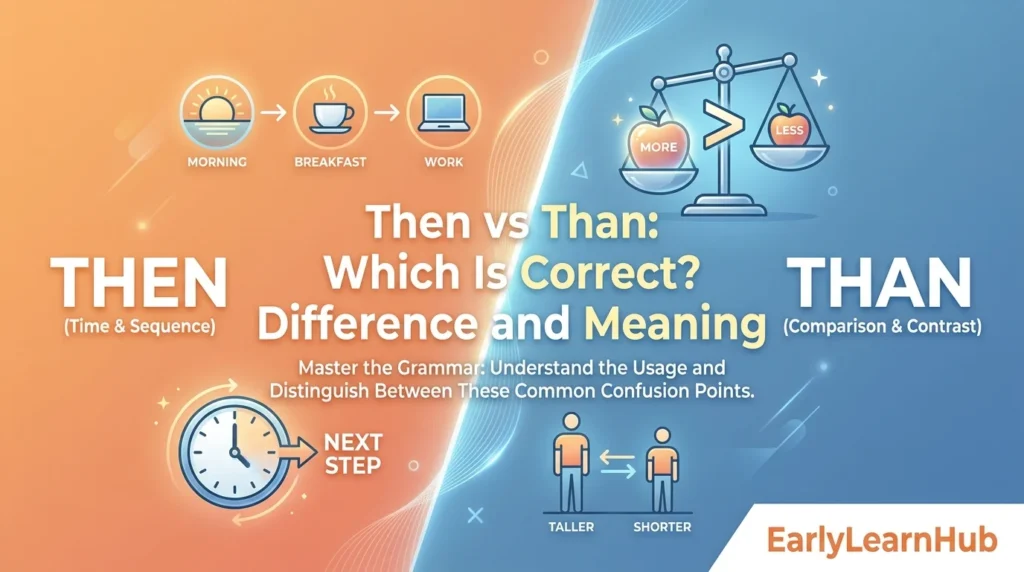
Then and than are commonly confused because they look and sound similar, but they have different meanings and grammatical functions. The simplest way to remember the difference is that then usually relates to time, sequence, or result, while than is mainly used for comparisons.
If you’re unsure which spelling is correct, explore these Signalling or Signaling usage and examples to see how both forms are used in real-world English.
Then vs Than: Which Is Correct?
Both then and than are correct English words, but they are used in different situations.
- Then is correct when you mean at that time, next, after that, or in that case.
- Than is correct when you are comparing two people, things, quantities, or ideas.
For example:
- I was younger then.
- She is younger than me.
In the first sentence, then refers to a time. In the second, than introduces a comparison.
What Is the Difference Between Then and Than?
The main difference between then and than is their purpose in a sentence.
| Word | Main meaning | Common use | Example |
| Then | At that time, next, after that, in that case | Time, sequence, result | We ate dinner, then watched TV. |
| Than | In comparison with | Comparisons | Sarah is taller than Anna. |
Then can describe when something happened or what happens next. It can also be used to express a result or consequence. Than is primarily used to connect the two parts of a comparison.
Then Meaning
Then is an adverb that commonly refers to a particular time or sequence. Cambridge Dictionary identifies several uses, including at that time, next or after that, and as a result or in that case.
Then Meaning “At That Time”
Use then when referring to a particular time in the past or future.
Examples:
- I lived in London then.
- She was only ten then.
- I’ll call you then.
- We didn’t know each other then.
- I was much happier then.
A useful question to ask is: When?
If the answer is then, you probably need then.
Then Meaning “Next” or “After That”
Then can also show the next event in a sequence.
Examples:
- First, wash your hands, then eat your lunch.
- She finished her homework and then went outside.
- Open the door, then turn on the light.
- We went to the restaurant and then watched a movie.
- He graduated from college and then started working.
Cambridge specifically lists this use of then as meaning “next or after something has happened.”
Then Meaning “In That Case”
Then can also indicate a result or consequence, especially in sentences containing if.
Examples:
- If you are tired, then go to bed.
- If it rains, then we will stay home.
- If you need help, then call me.
- If you study hard, then you should pass the test.
This use is common in if-then constructions.
Than Meaning
Than is a preposition or conjunction primarily used to introduce the second part of a comparison. It is commonly used after comparative words such as more, less, better, taller, faster, older, and easier.
Than for Comparisons
Use than when comparing two people, objects, quantities, or ideas.
Examples:
- John is taller than Mark.
- This car is faster than mine.
- She is older than her brother.
- This test is easier than the last one.
- Winter is colder than autumn.
The key question is: Are you comparing something?
If yes, than is usually the correct word.
Than With More and Less
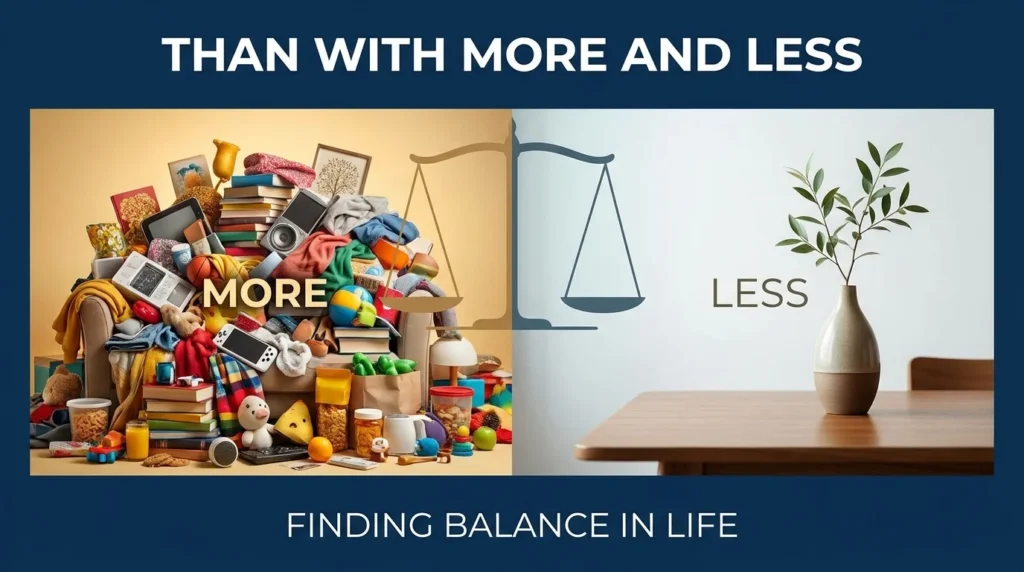
Than frequently follows more, less, and fewer when comparing amounts or numbers.
Examples:
- I have more books than you.
- She earns more money than I do.
- The trip took less time than expected.
- There were fewer people than we expected.
- He spent more than $100.
Cambridge and Oxford both identify this comparison pattern as a standard use of than.
Than With Other Comparative Words
You can also use than after comparative adjectives and adverbs.
Examples:
- better than
- bigger than
- smaller than
- faster than
- slower than
- earlier than
- later than
- more difficult than
- less expensive than
For example:
This method is better than the old one.
My new phone is faster than my previous phone.
Then vs Than Examples
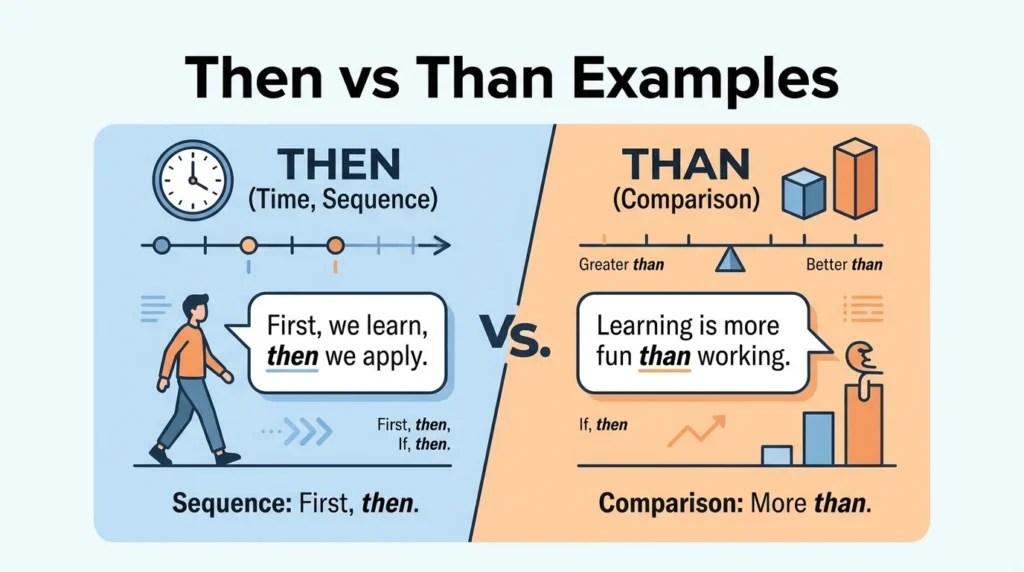
Seeing the words side by side makes the difference easier to understand.
Examples With Then
- I was living there then.
- We finished dinner and then went home.
- I’ll see you then.
- First read the instructions, then answer the questions.
- If you are ready, then we can begin.
- She was much younger then.
- We didn’t have smartphones then.
- He worked as a teacher then.
- Finish your homework, then you can play.
- I didn’t understand it then, but I do now.
Examples With Than
- My brother is taller than me.
- This book is better than that one.
- She runs faster than I do.
- The blue car is more expensive than the red one.
- I have fewer assignments than you.
- He is older than his sister.
- This problem is harder than I expected.
- The movie was more interesting than the book.
- It took longer than we thought.
- Nothing is more important than your health.
Then or Than in Common Sentences
Some phrases are especially easy to confuse.
“Better Then” or “Better Than”?
The correct phrase is better than when making a comparison.
Correct: This phone is better than my old one.
Incorrect: This phone is better then my old one.
Here, than connects the two things being compared.
“More Then” or “More Than”?
The correct expression is more than.
Correct: She has more than enough time.
Incorrect: She has more then enough time.
Than is used with more to compare quantities or amounts.
“Less Then” or “Less Than”?
The correct expression is less than.
Correct: The journey takes less than an hour.
Incorrect: The journey takes less then an hour.
“First Then” or “First Than”?
The correct expression is first, then when describing a sequence.
Correct: First, add the flour, then add the eggs.
Incorrect: First, add the flour, than add the eggs.
Here, then means “next” or “after that.”
“Rather Then” or “Rather Than”?
The standard expression is rather than.
Correct: I would walk rather than drive.
Incorrect: I would walk rather then drive.
Than is used in the expression rather than. Merriam-Webster and Oxford both identify this as a use of than.
How to Remember Then vs Than
A simple memory trick can help:
Then = Time
Both then and time contain the letter e.
Think:
Then = When?
Examples:
- I lived there then.
- We will leave then.
- Eat first, then leave.
Than = Comparison
Think:
Than = Comparison
Examples:
- She is taller than me.
- This is better than that.
- I have more than you.
Another useful shortcut is:
Then = sequence or time
Than = comparison
Why Are Then and Than Confused?
The words are frequently confused because they have similar spellings and pronunciations. Merriam-Webster notes that they are often confused despite having very different meanings and uses.
Historically, the words are also related. Oxford notes that than comes from an Old English form that was originally the same word as then, which helps explain some of their similarity.
However, in modern English, their functions are clearly different:
- Use then for time, sequence, or consequence.
- Use than for comparisons.
Then vs Than: Quick Test
Try replacing the word with one of these:
For then:
- at that time
- next
- after that
- in that case
For than:
- compared with
- in comparison with
For example:
I was happier then.
Replace it:
I was happier at that time.
The sentence makes sense, so then is correct.
Now consider:
Sarah is taller than Jane.
Replace it:
Sarah is taller compared with Jane.
The comparison makes sense, so than is correct.
Then vs Than in a Sentence
Here are examples containing both words:
I was younger then, and I was shorter than my brother.
Finish your work then you can have more free time than before.
She was happier then because she had more time than she does now.
We went to the park then visited a café that was cheaper than the one nearby.
These examples show why the words cannot normally be substituted for each other. Then indicates time or sequence, while than establishes a comparison.
Summary
Then and than are both correct words, but they have different uses.
- Then refers to time, sequence, or a result.
- Than is used for comparisons.
- Use then in phrases such as then, back then, first, then, and if-then statements.
- Use than after comparative words such as more, less, better, taller, faster, and older.
- More than, less than, and rather than all use than.
- A quick memory trick is then = time and than = comparison.
When you are unsure, ask yourself: Am I talking about when something happened or what happens next? Use then. Am I comparing two things? Use than.
FAQs
Is “then” or “than” correct?
Both then and than are correct. The correct choice depends on the meaning. Use then for time, sequence, or result, and than for comparisons.
What is the main difference between then and than?
Then usually relates to time, sequence, or consequence, while than is mainly used to make comparisons.
Is it “better then” or “better than”?
The correct phrase is better than because than introduces a comparison.
Is it “more then” or “more than”?
The correct phrase is more than. For example, “She has more than enough time.”
Is it “first then” or “first than”?
Use first, then when describing a sequence. For example, “First, wash the vegetables, then cut them.”
Is it “rather then” or “rather than”?
The correct expression is rather than. For example, “I would walk rather than drive.”
How can I remember the difference between then and than?
Remember then = time and than = comparison. If you can replace the word with “at that time” or “next,” use then. If you are comparing things, use than.
Can then be used for the future?
Yes. Then can refer to a future time. For example, “I’ll call you tomorrow, and we’ll discuss it then.”
Can than be used without a comparison?
Than is most commonly associated with comparisons, including expressions such as rather than, other than, and no sooner … than.
Is “then” used after “if”?
Yes. Then can be used in an if-then construction to express a result or consequence, such as “If it rains, then we will stay home.”

Grace Holloway is a Creative Learning Designer with more than 9 years of experience producing visually engaging educational resources for preschool and kindergarten children. She specializes in combining educational principles with creative design to develop worksheets that encourage learning through play, exploration, and creativity.