
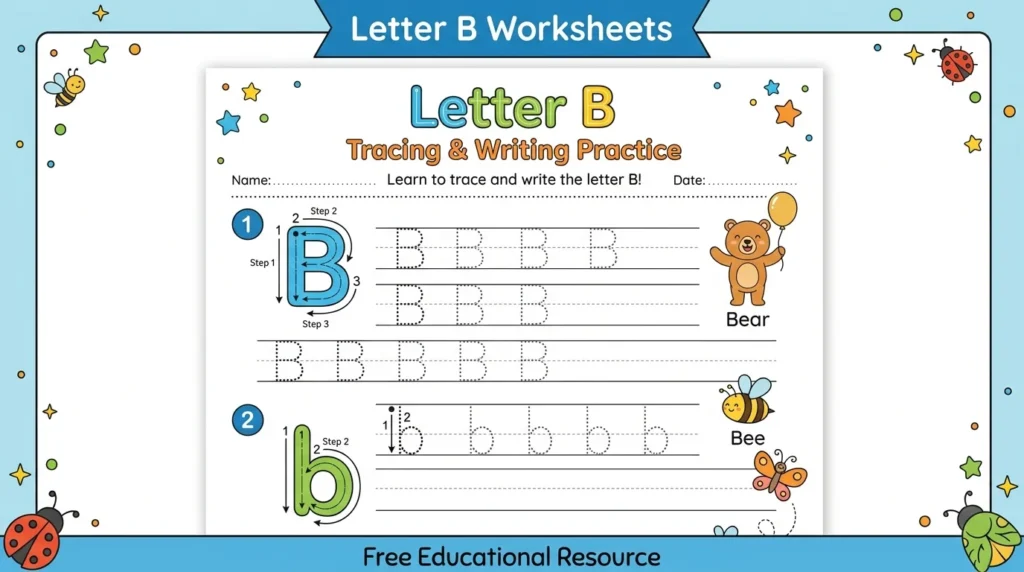
Learning the alphabet becomes more engaging when children can see, trace, say, color, and write each letter. These Letter B worksheets provide a variety of hands-on activities that help preschool and kindergarten children become familiar with uppercase B and lowercase b.
The worksheet collection includes tracing practice, letter formation, beginning-sound activities, picture recognition, coloring, word identification, and handwriting exercises. Children can practice the letter B while working with familiar B words such as bear, banana, ball, bee, boat, butterfly, book, and balloon.
These printable activities can be used at home, in preschool classrooms, kindergarten centers, tutoring sessions, or as extra alphabet practice.
What Are Letter B Worksheets?
Letter B worksheets are printable learning activities that help children recognize, trace, write, and understand the letter B/b.
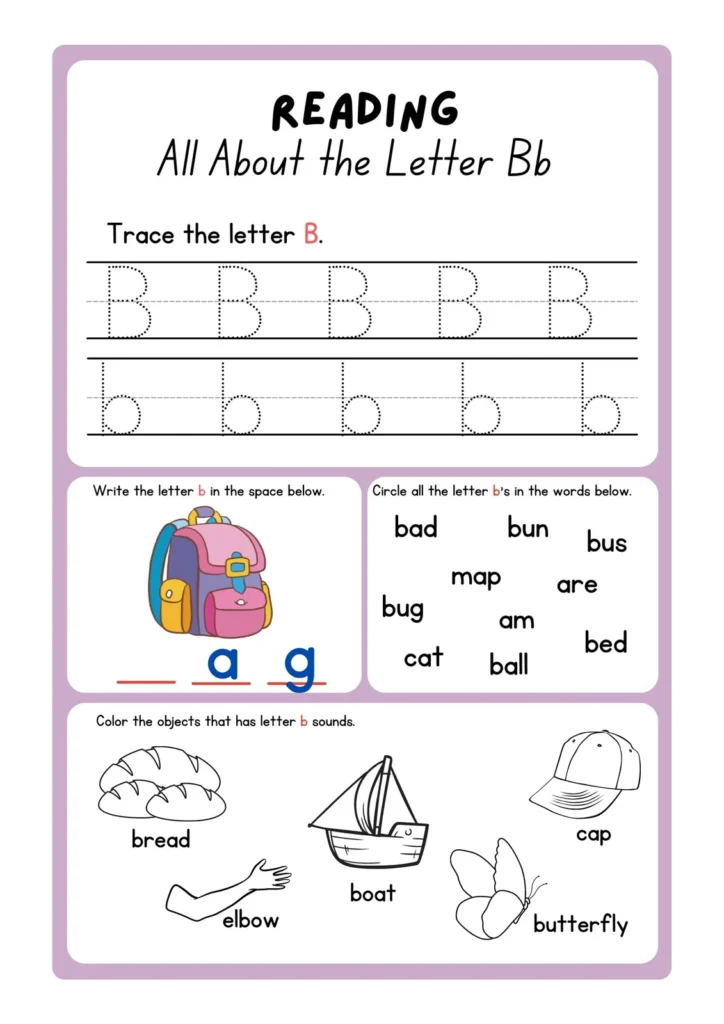
The uploaded worksheet examples cover several important early literacy skills. Some pages concentrate on tracing uppercase and lowercase letters, while others introduce children to pictures and words that begin with the B sound.
A varied worksheet collection is useful because young learners do not all practice letters in exactly the same way. One child may benefit from repeated tracing, while another may respond better to pictures, coloring, or word recognition.
What Children Can Practice With These Worksheets
These Letter B worksheets provide practice in several areas of early alphabet learning.
Uppercase B Tracing
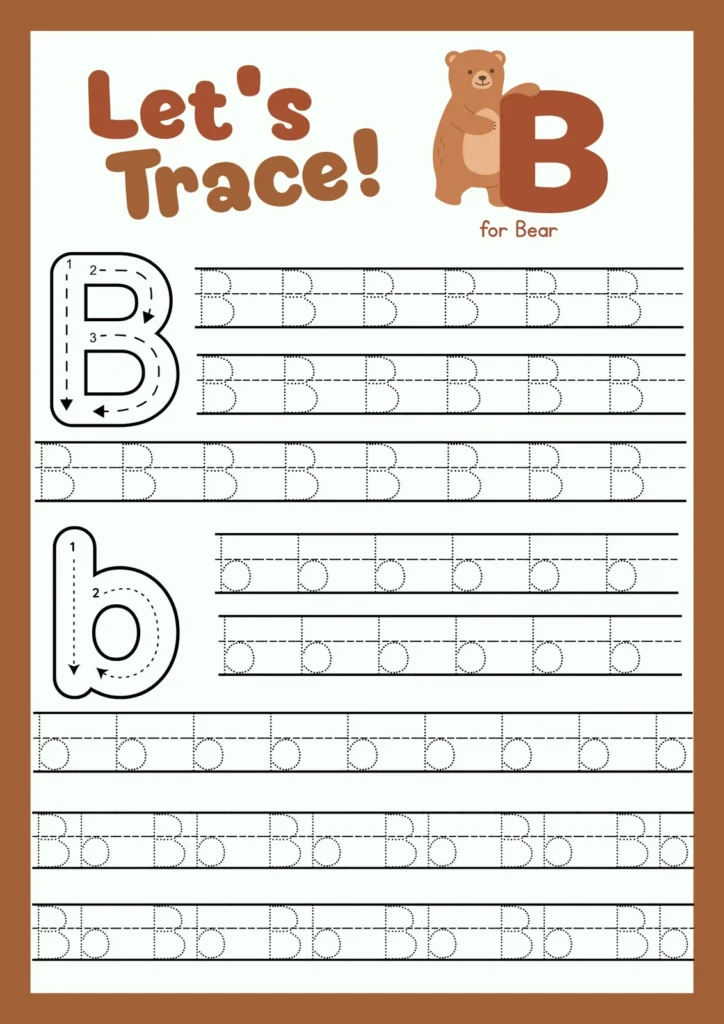
Children trace the capital letter B using dotted or guided lines. This helps them become familiar with the shape and direction of the letter.
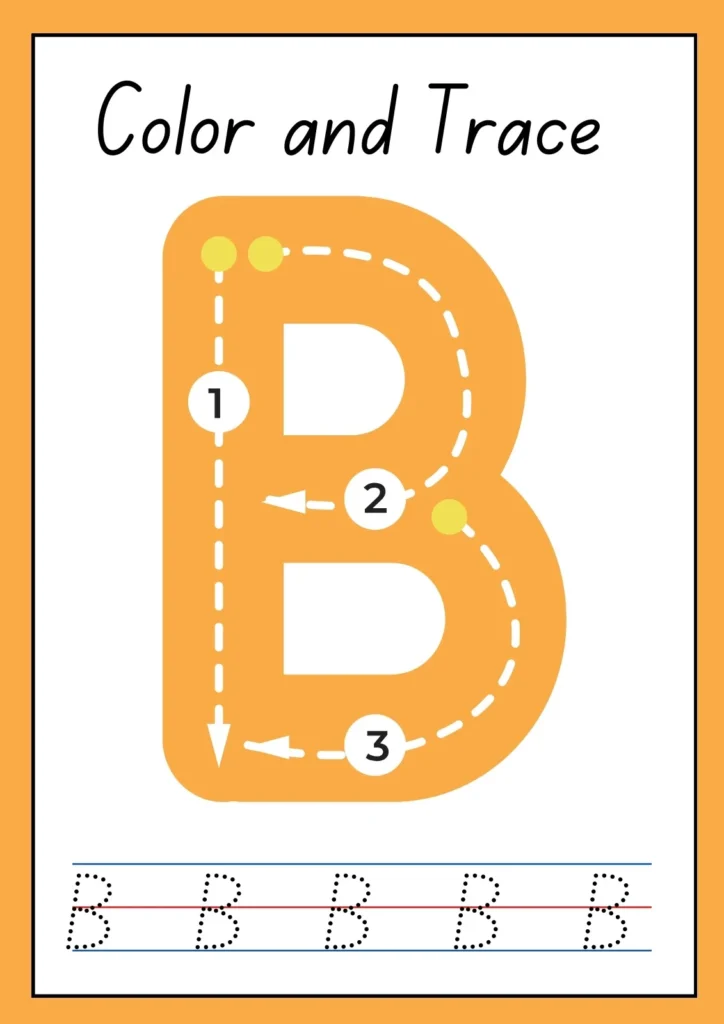
The capital B generally consists of a vertical line followed by two rounded sections. Tracing activities give children an opportunity to practice this formation before attempting it independently.
Lowercase b Tracing
The worksheets also include lowercase b practice.
Children can trace the vertical stroke and rounded portion of lowercase b while becoming familiar with how it differs from uppercase B.
Uppercase and Lowercase Recognition
Several activities show B and b together. This helps children understand that uppercase and lowercase forms represent the same letter.
For example:
B = uppercase
b = lowercase
Repeated exposure can make it easier for children to identify the letter in books, signs, labels, and simple words.
Letter Formation Practice
The handwriting pages provide guided lines that help children practice positioning their letters.
Children can move gradually from:
Trace → Copy → Write independently
This progression can make handwriting practice more manageable for beginners.
Letter B Beginning Sound Activities
Some of the worksheets introduce children to words beginning with B.
Examples include:
- Ball
- Banana
- Bear
- Bee
- Boat
- Book
- Butterfly
- Baby
- Balloon
Picture-based activities can help children connect the visual letter B with words they already know.
For example:
B is for Bear.
B is for Ball.
B is for Banana.
B is for Bee.
This connects letter recognition with vocabulary and early phonics practice.
Types of Letter B Worksheets in This Collection
The uploaded images provide several different worksheet formats.
Letter B Tracing Worksheets
These pages contain repeated dotted uppercase and lowercase letters.
They are particularly useful for handwriting repetition because children can practice the same letter several times on one page.
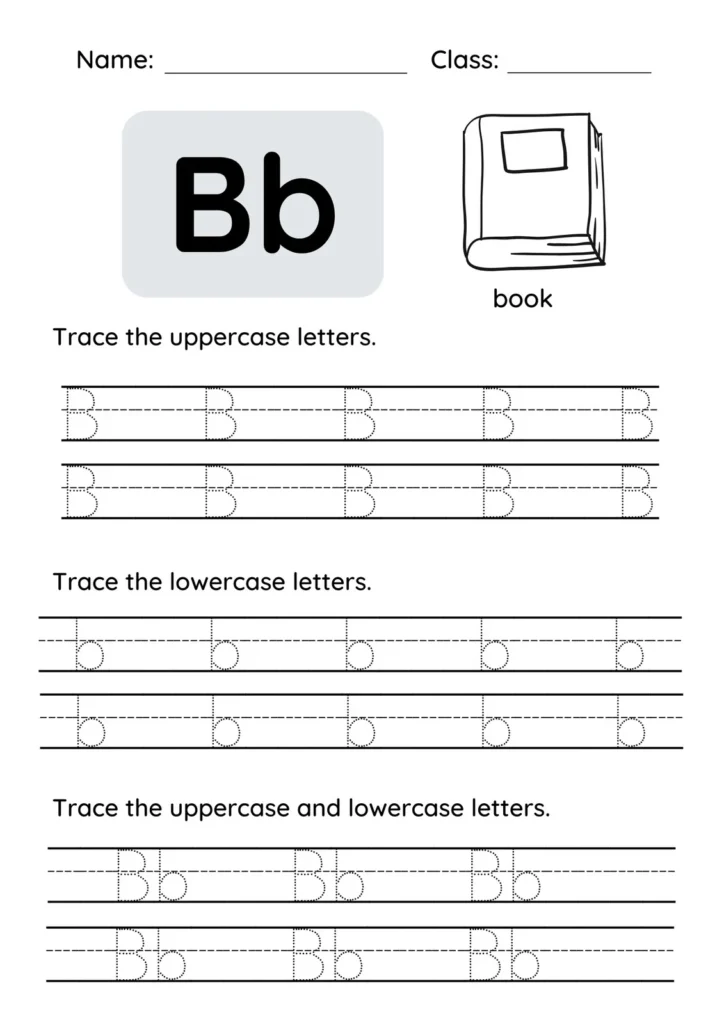
Letter B Color and Trace Worksheets
These activities combine tracing with coloring. A large letter B provides a visual focus, while smaller letters at the bottom give children additional handwriting practice.
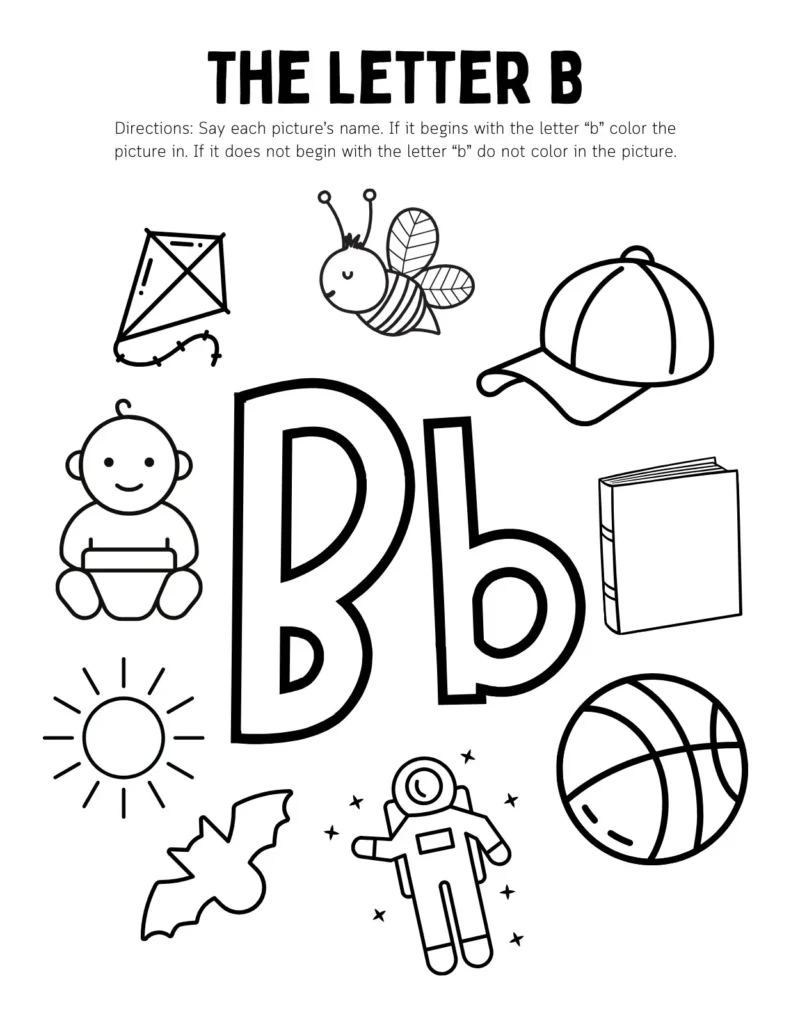
Letter B Picture Worksheets
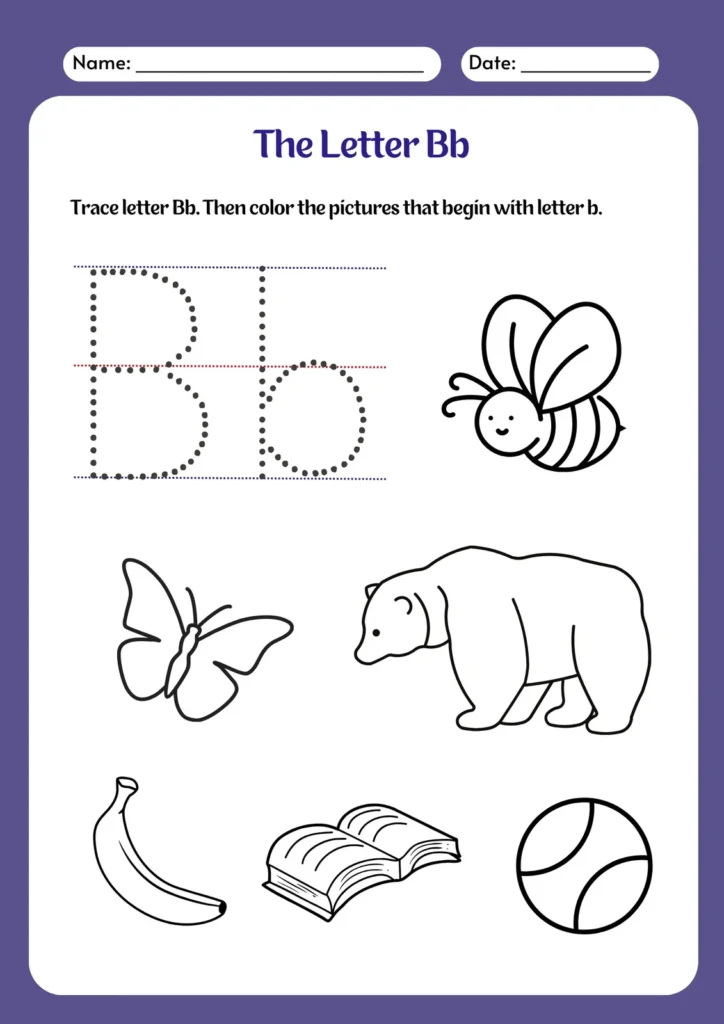
Picture-based worksheets introduce objects or animals beginning with B.
Examples shown in the collection include banana, bear, bee, butterfly, ball, and book.
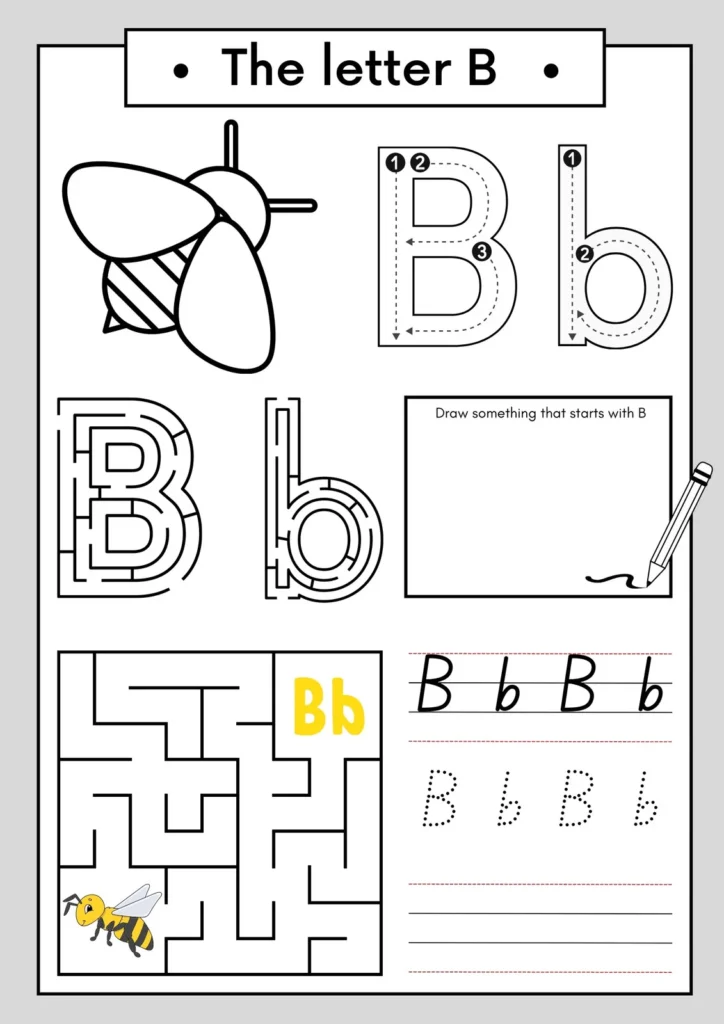
Letter B Word Recognition Worksheets
Some activities ask children to identify words that begin with B or recognize the letter B within simple words.
This moves learning beyond isolated letter tracing and introduces early reading awareness.
Uppercase and Lowercase B Worksheets
Children practice both:
B B B B B
and
b b b b b
They can then practice combinations such as:
Bb Bb Bb
This is useful for reinforcing the relationship between uppercase and lowercase forms.
Letter B Coloring Activities
Coloring pages can add variety to alphabet practice. Children can color pictures associated with B while practicing the target letter.
These activities can be especially useful for younger preschool learners who may not yet have the fine-motor control needed for extensive handwriting.
Letter B Maze and Activity Pages
The collection also includes a maze-style activity involving the letter B. This gives children another way to interact with the target letter without relying entirely on handwriting.
Letter B Activities For Preschoolers
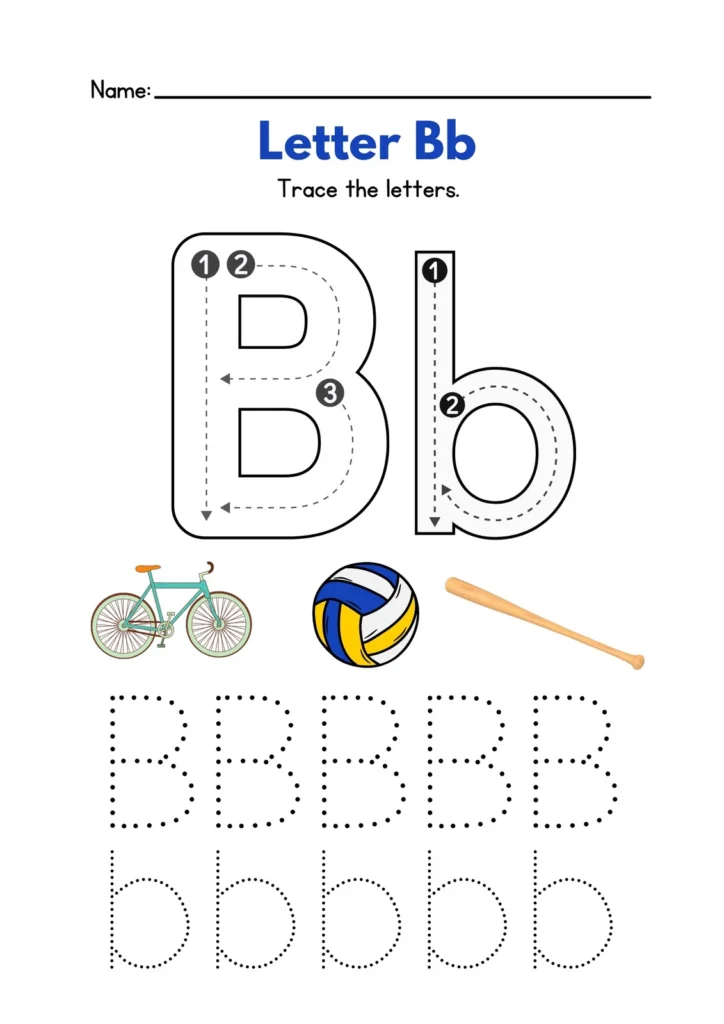
Letter B Beginning Sound Worksheet
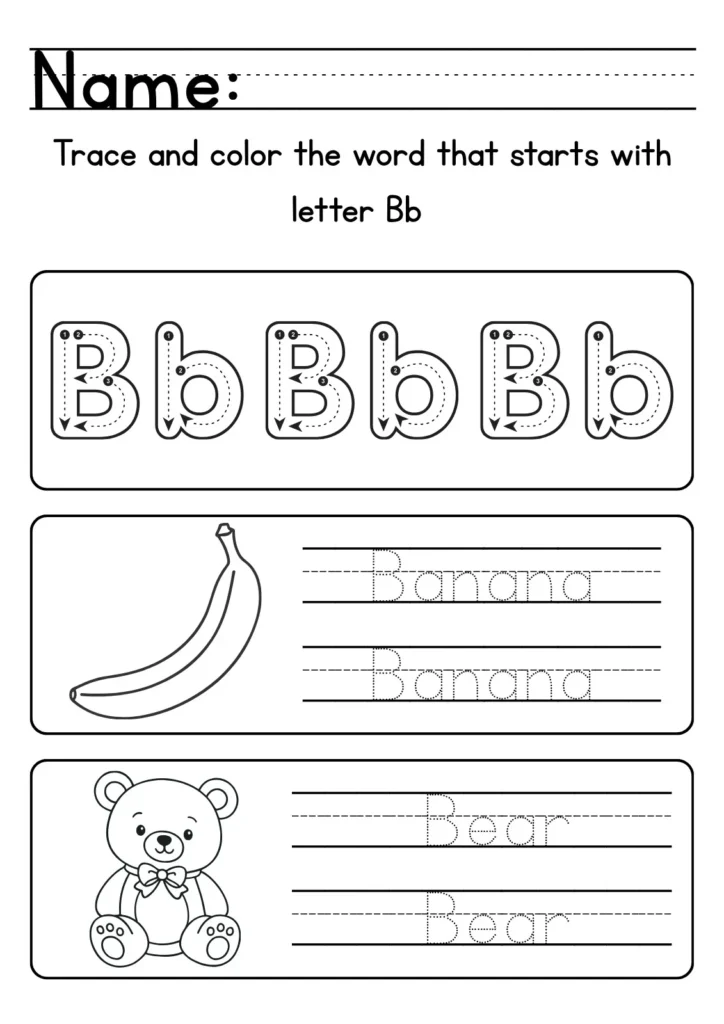
Letter B Handwriting Practice
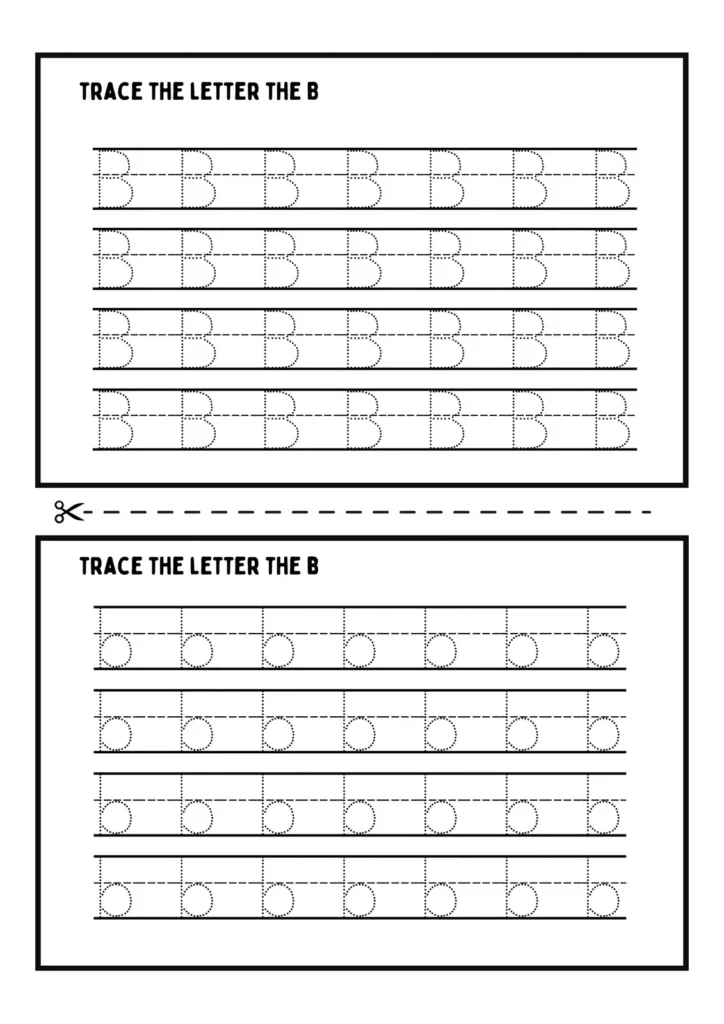
How to Use Letter B Worksheets
For younger children, avoid trying to complete every activity in one sitting. Short, repeated practice sessions can be easier to manage.
A simple learning routine can look like this:
Step 1: Introduce B
Show the child uppercase B and lowercase b.
Say the letter name clearly:
“This is B. This is lowercase b.”
Step 2: Practice the Sound
Introduce simple B words.
For example:
B says /b/ as in ball.
You can then ask the child to identify other objects that begin with the same sound.
Step 3: Trace the Letter
Start with large guided letters. Encourage the child to follow the dots and arrows.
Step 4: Practice Independent Writing
After tracing, provide an opportunity to write B and b without dotted guides.
Step 5: Add Picture Activities
Use pictures such as a bear, banana, bee, or ball to reinforce the connection between the letter and its beginning sound.
Step 6: Review
Finish with a quick recognition activity. Ask the child to find B among several other letters.
Letter B Words for Preschoolers
Here are some simple vocabulary words that can accompany these worksheets:
| B Word | Meaning |
|---|---|
| Baby | A very young child |
| Ball | A round object used for play |
| Banana | A yellow fruit |
| Bear | A large mammal |
| Bee | A flying insect |
| Bird | An animal with feathers and wings |
| Boat | A vehicle that travels on water |
| Book | Something we read |
| Box | A container |
| Bus | A vehicle for carrying passengers |
| Butterfly | An insect with colorful wings |
| Balloon | A lightweight object filled with air or gas |
Using familiar vocabulary can make letter practice more meaningful for young learners.
Benefits of Letter B Tracing Worksheets
Letter tracing worksheets can support several early learning skills when used appropriately.
Letter Recognition
Repeated exposure helps children become more familiar with the visual shape of B and b.
Fine-Motor Practice
Tracing requires children to control a pencil or crayon while following a specific path.
Handwriting Preparation
Guided tracing introduces children to basic letter formation before independent writing.
Visual Discrimination
Activities that ask children to find or identify B help them distinguish the target letter from other letters.
Early Phonics Awareness
Picture and beginning-sound activities connect the letter B with words that start with the /b/ sound.
Vocabulary Development
Words such as bear, banana, book, and butterfly provide opportunities to build vocabulary alongside alphabet learning.
Letter B Activities for Preschool and Kindergarten
These worksheets can be combined with simple hands-on activities.
B Word Hunt
Ask children to find objects around the classroom or home that begin with B.
Examples might include a ball, book, box, bag, or bottle.
Letter B Coloring
Give children a large letter B and ask them to decorate it using crayons, pencils, or markers.
B Sound Game
Say several words aloud and ask children to clap when they hear a word beginning with B.
For example:
ball, cat, banana, dog, bear
The child claps for ball, banana, and bear.
Make a B Collage
Children can cut out or draw pictures of B words and place them on a large paper letter B.
B Writing Practice
After tracing B and b, encourage children to write the letters independently on lined paper.
Tips for Parents and Teachers
When teaching letter formation, focus on correct direction rather than simply completing the worksheet.
Encourage children to hold their writing tool comfortably and use controlled movements.
It is also helpful to say the letter name and sound while practicing. For example:
“B says /b/. B is for ball.”
Keep activities age-appropriate. Preschool children may need more tracing and coloring, while kindergarten learners may be ready for independent writing and simple B words.
Most importantly, make the activity positive. Young children often learn better when alphabet practice feels like a game rather than a test.
Who Can Use These Letter B Worksheets?
These worksheets are suitable for:
- Preschool children
- Pre-K learners
- Kindergarten students
- Early elementary learners
- Homeschool lessons
- Classroom alphabet centers
- Tutoring sessions
- At-home handwriting practice
- Early phonics activities
- Letter recognition practice
Teachers can use individual pages as morning work, literacy centers, homework, or additional practice.
Parents can also select a few pages for short home learning sessions.
How to Help a Child Who Struggles With B
Some children confuse lowercase b with lowercase d. Regular visual and handwriting practice can help them notice the difference.
Focus specifically on the direction and formation of the lowercase b. Use large movements first, then move to pencil-and-paper practice.
You can also use verbal reminders and tactile activities, such as forming the letter with modeling clay or tracing it with a finger.
If a child continues to struggle significantly with letter recognition or writing, discuss their progress with their teacher or appropriate educational professional rather than assuming that additional worksheets alone will solve the difficulty.
Frequently Asked Questions
What age is best for Letter B worksheets?
Letter B worksheets are commonly useful for preschool, pre-K, and kindergarten learners. The appropriate activity depends on the child’s current letter recognition and fine-motor skills.
What does the letter B sound like?
The letter B commonly represents the /b/ sound, as in ball, bear, banana, and book.
Should children learn uppercase or lowercase B first?
Many early literacy programs introduce uppercase and lowercase letters together. Children should eventually recognize and write both B and b.
What are some easy B words for kids?
Easy B words include ball, bear, bee, book, boat, banana, baby, bird, box, and butterfly.
How can I teach my child to write B?
Begin with large guided examples. Show the correct starting point and direction, then let the child trace B before practicing it independently.
Are Letter B worksheets good for kindergarten?
Yes. They can provide additional practice with letter recognition, handwriting, beginning sounds, and vocabulary. Choose worksheets that match the child’s current skill level.
How can I make Letter B practice more fun?
Combine tracing with coloring, picture matching, object hunts, songs, crafts, and simple B-word games. Variety can keep children engaged while reinforcing the same skill.
Final Thoughts
These Letter B worksheets provide a flexible collection of alphabet activities for young learners. Instead of focusing only on repeated writing, the pages combine tracing, handwriting, coloring, picture recognition, beginning sounds, word recognition, and letter identification.
For the best learning experience, introduce B and b, practice the letter formation, connect B with familiar words, and gradually encourage independent writing. Short and consistent practice can help children build confidence as they develop early literacy skills.

Grace Holloway is a Creative Learning Designer with more than 9 years of experience producing visually engaging educational resources for preschool and kindergarten children. She specializes in combining educational principles with creative design to develop worksheets that encourage learning through play, exploration, and creativity.