
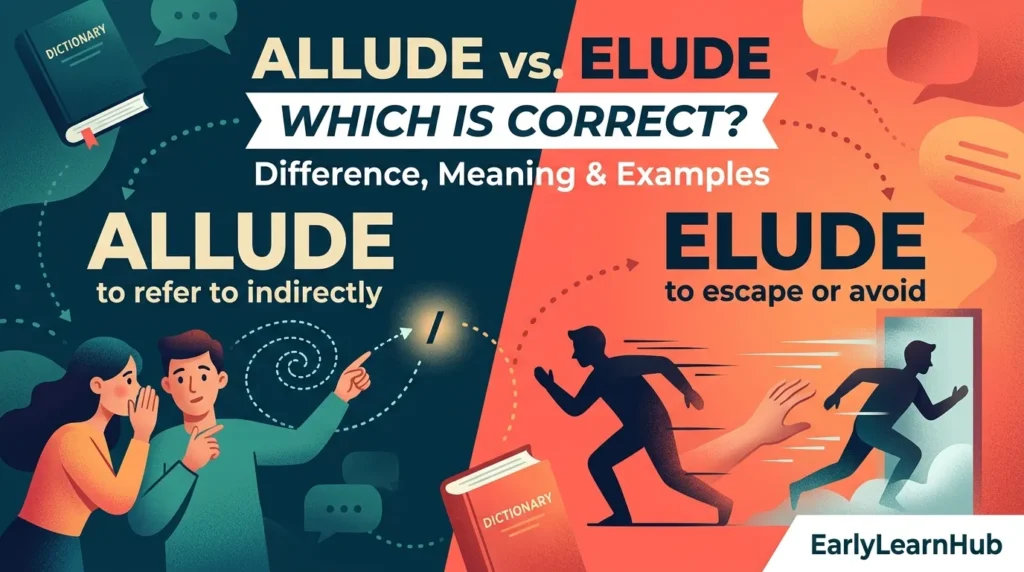
Allude and elude are both verbs, and they sound very similar, but they have completely different meanings. Allude means to refer to something indirectly or hint at it, while elude means to escape, avoid, or remain difficult to achieve, understand, or remember.
Allude vs. Elude: Which Is Correct?
Both allude and elude are correct English words, but they cannot usually be used interchangeably.
- Allude means to mention or refer to something indirectly.
- Elude means to escape or avoid someone or something, or to remain beyond someone’s understanding, memory, or achievement.
So, the correct word depends on what you want to express.
Example:
- The speaker alluded to the problem without discussing it directly.
- The suspect eluded the police.
Learn when to use Too Early or To Early to improve your spelling and write grammatically correct English sentences.
What Is the Difference Between Allude and Elude?
The main difference between allude and elude is the action they describe.
Allude is about an indirect reference. When you allude to something, you mention it briefly or indirectly instead of stating it directly. Cambridge specifically describes allude to as mentioning someone or something without talking about it directly.
Elude is about escape, avoidance, or something remaining out of reach. A person can elude a pursuer, while a goal, answer, memory, or explanation can also elude someone.
| Word | Meaning | Common Use |
| Allude | Refer to something indirectly | allude to a problem |
| Elude | Escape, avoid, or remain beyond reach | elude the police |
| Allude | Hint at something | allude to the past |
| Elude | Be difficult to achieve or understand | success eluded him |
Allude Meaning
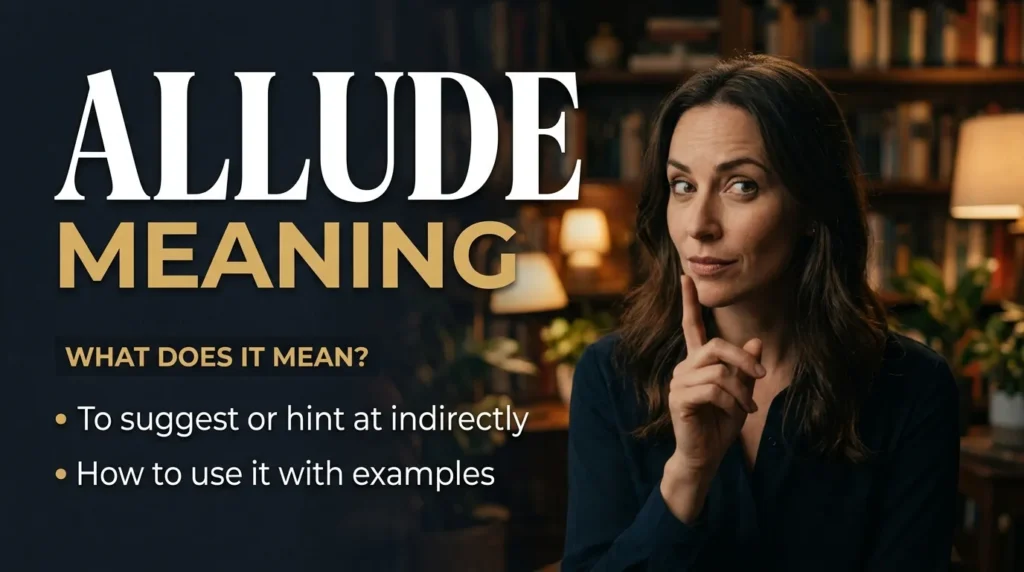
Allude means to refer to someone or something indirectly, usually without clearly naming or explaining it. It is commonly followed by to.
Allude = hint at or refer to indirectly.
For example:
The author alluded to several historical events in the novel.
The author did not necessarily explain those events in detail. Instead, the author made indirect references to them.
How to Use Allude in a Sentence
The most common structure is:
allude to + person, thing, subject, or event
Examples:
- She alluded to her previous experience during the interview.
- The article alludes to several political controversies.
- He alluded to the difficulties he had faced.
- The teacher alluded to an important historical event.
- The novel alludes to Greek mythology.
Grammarly also notes that allude is commonly used when making an indirect reference, particularly in literary and rhetorical contexts.
Elude Meaning
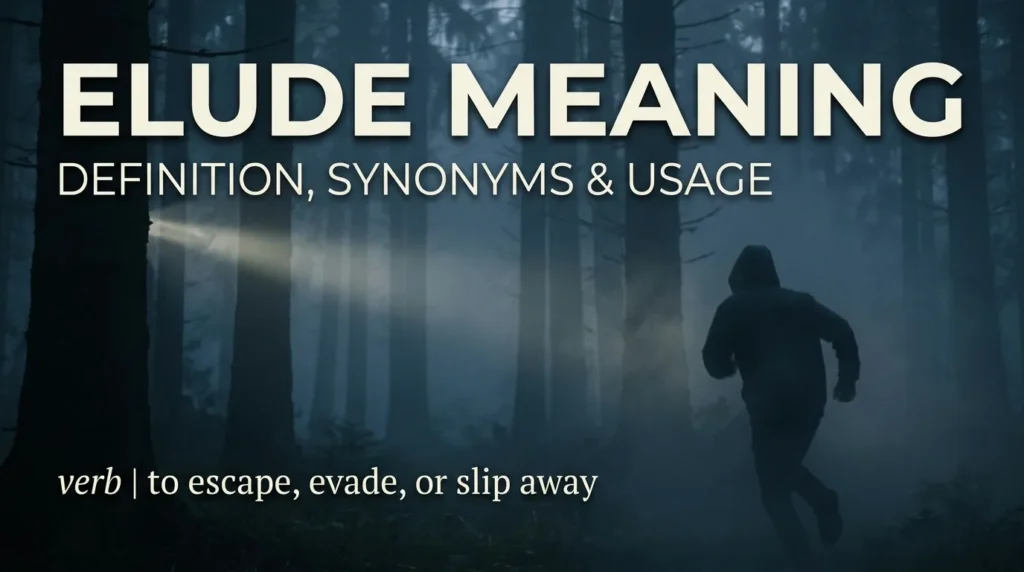
Elude means to escape or avoid someone or something, especially by being difficult to catch. It can also describe something that remains difficult to achieve, understand, recognize, or remember.
Elude = escape, avoid, or remain beyond reach.
For example:
The suspect managed to elude the police.
Here, elude means the suspect successfully avoided being captured.
But elude does not only refer to physical escape. You can also say:
The answer eluded me.
This means that you could not remember or understand the answer.
How to Use Elude in a Sentence
Examples include:
- The thief eluded the police.
- Success continued to elude the team.
- The meaning of the poem eluded me.
- Her name eluded me for several minutes.
- The researchers could not find the solution that had eluded them for years.
Cambridge lists several uses of elude, including escaping capture, failing to achieve something, and being unable to remember information.
Allude vs. Elude Pronunciation
Although allude and elude have similar pronunciations, their first vowel sounds are different.
- Allude: /əˈluːd/
- Elude: /ɪˈluːd/
Both words have stress on the second syllable.
A useful way to distinguish them is to focus on their meanings rather than relying only on pronunciation.
Allude Examples
Here are some examples of allude used correctly:
- The politician alluded to the controversy during the speech.
- She alluded to her childhood without giving many details.
- The author alludes to Shakespeare throughout the novel.
- He alluded to a possible change in the company’s plans.
- The teacher alluded to the answer but did not reveal it.
- The movie alludes to several famous historical events.
In each example, allude involves an indirect reference or hint.
Learn when to use If Time Permits or If Time Allows to express availability naturally in professional and everyday English.
Elude Examples
Here are some examples of elude used correctly:
- The criminal managed to elude the police.
- The answer continued to elude me.
- The championship had eluded the team for years.
- The meaning of the passage eluded the students.
- The fox quickly eluded its pursuers.
- Despite years of research, a complete explanation still eludes scientists.
In these examples, elude expresses escape, avoidance, or something remaining difficult to obtain or understand.
Allude vs. Elude in Simple Sentences
A simple way to remember the difference is to compare these sentences:
Allude:
The speaker alluded to the incident.
Meaning: The speaker referred to the incident indirectly.
Elude:
The suspect eluded the police.
Meaning: The suspect escaped or avoided the police.
Another useful comparison is:
She alluded to the answer.
This means she hinted at the answer.
The answer eluded her.
This means she could not remember, understand, or obtain the answer.
Common Mistakes With Allude and Elude
One common mistake is using elude when you mean allude.
Incorrect:
The author eluded to the historical event.
Correct:
The author alluded to the historical event.
Another common mistake is using allude when you mean escape.
Incorrect:
The suspect alluded the police.
Correct:
The suspect eluded the police.
Remember that allude is generally followed by to, as in allude to something. Elude normally takes a direct object, as in elude the police or elude an opponent.
Allude or Elude: How to Remember the Difference
A simple memory trick can help:
Allude = indirect reference
Think:
A = Allude = Add a hint
Elude = escape or remain out of reach
Think:
E = Elude = Escape
So:
- If you are hinting at something, use allude.
- If something is escaping you or remaining beyond your reach, use elude.
Summary
Allude and elude are both correct words, but they have different meanings.
Allude means to refer to or hint at something indirectly, and it is commonly used in the phrase allude to. Elude means to escape or avoid someone or something, or to remain difficult to achieve, understand, or remember.
The easiest distinction is:
Allude = hint or refer indirectly.
Elude = escape, avoid, or remain out of reach.
FAQs
Is it allude or elude?
Both allude and elude are correct words, but they have different meanings. Allude means to refer to something indirectly, while elude means to escape, avoid, or remain beyond reach.
What is the difference between allude and elude?
Allude means to make an indirect reference to something. Elude means to escape or avoid something, or to be difficult to achieve, understand, or remember.
Is it allude to or elude to?
The correct expression for making an indirect reference is allude to. For example, “She alluded to the problem.” Elude generally does not use to in this construction.
What does allude mean?
Allude means to refer to someone or something indirectly or to hint at it without stating it directly.
What does elude mean?
Elude means to escape or avoid someone or something. It can also mean that something such as an answer, memory, goal, or explanation remains difficult to obtain or understand.
Can allude and elude be used interchangeably?
No. They have different meanings. Use allude for an indirect reference and elude for escape, avoidance, or something remaining beyond reach.
What is an example of allude?
“The speaker alluded to his previous career.” This means the speaker referred to his previous career indirectly.
What is an example of elude?
“The suspect eluded the police.” This means the suspect escaped or avoided being captured.
Is “eluded me” correct?
Yes. Eluded me is correct when something is difficult for you to remember, understand, achieve, or obtain. For example, “Her name eluded me.”

Sophia Reed is an accomplished Fact-Checking Editor with more than 11 years of experience ensuring the accuracy, credibility, and integrity of digital content. She specializes in verifying facts, reviewing sources, assessing editorial reliability, and maintaining high publishing standards across a wide range of online publications.