
If a child asks, “Is Santa real or is it your parents?”, they are usually trying to understand the difference between the traditional Santa Claus story and what actually happens on Christmas Eve.
The simplest answer is that the modern Santa Claus who flies around the world in a sleigh, lives at the North Pole, and delivers presents to every child is a legendary character, not a single real person. In many families, parents or other family members buy and place the gifts associated with Santa. However, the Santa tradition has roots in the historical figure of Saint Nicholas, a Christian bishop associated with generosity and gift-giving.
Improve your English usage by learning when to choose In the Street or On the Street in different contexts.
Is Santa Real or Is It Your Parents?
The answer depends on what you mean by “Santa.”
The Santa Claus character described in Christmas stories is part of folklore and tradition. There is no evidence of one magical person who travels worldwide in one night with flying reindeer.
At the same time, Saint Nicholas was a historical figure associated with the origins of the Santa tradition. Over centuries, stories and customs surrounding Saint Nicholas developed into the modern Santa Claus character.
For many families, parents help bring the Santa story to life. They may buy presents, wrap them, put them under the Christmas tree, leave cookies and milk, or create other traditions connected with Santa.
So, if the question is, “Are my parents the ones putting the presents under the tree?” the answer in many families is yes.
What Does “Is Santa Real?” Mean?
The question “Is Santa real?” can mean several different things.
A child may be asking:
- Is Santa Claus a real person?
- Does Santa actually live at the North Pole?
- Does he really fly with reindeer?
- Does he visit every house on Christmas Eve?
- Are the presents really from Santa?
- Are my parents pretending to be Santa?
These questions often appear as children become more curious about how the world works. Parenting experts generally recommend following the child’s lead and having an honest, age-appropriate conversation when the child starts asking serious questions.
Who Was the Real Saint Nicholas?
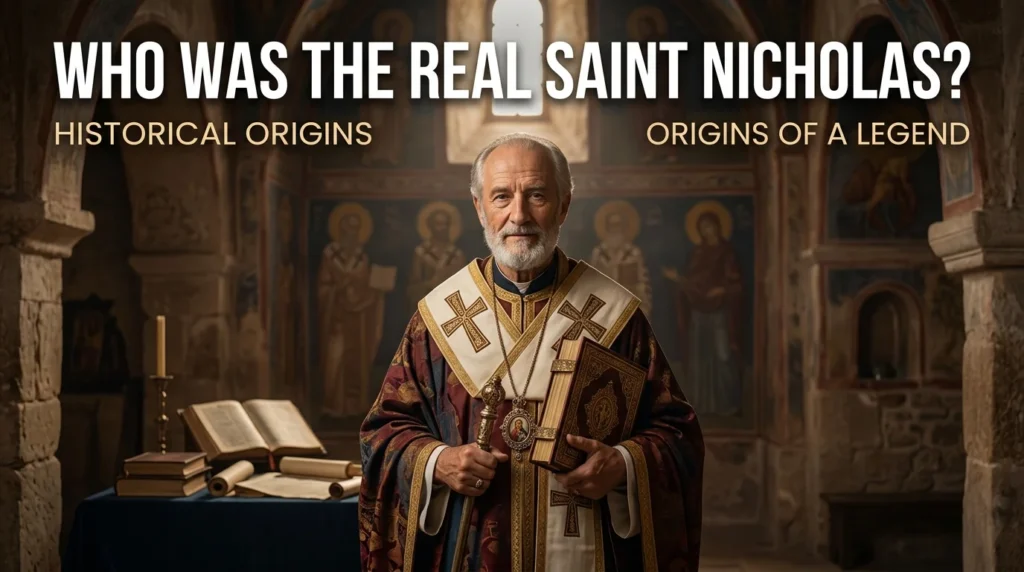
The Santa Claus tradition is commonly connected with Saint Nicholas, a fourth-century Christian bishop associated with Myra, in present-day Turkey.
Stories about Saint Nicholas emphasize generosity and secret gift-giving. One famous tradition tells of Nicholas secretly providing money to help a poor family. Over time, stories about his kindness contributed to customs involving gifts and children.
The modern Santa Claus is not simply Saint Nicholas unchanged. The character developed through different European and American traditions, eventually becoming the familiar figure with a red suit, white beard, reindeer, sleigh, and North Pole home.
Is Santa Claus a Real Person Today?
No, Santa Claus as the magical Christmas gift-giver is not a single real person today.
Santa is better understood as a legendary and cultural character whose story has developed over many generations. The tradition is still very real in the sense that millions of families celebrate it through stories, decorations, gifts, visits, and other Christmas customs.
This distinction is useful when answering children because “Santa isn’t real” can sound very different from “Santa is a special Christmas tradition based partly on stories about Saint Nicholas.”
Learn how to use Available To or Available For correctly when describing people, services, or opportunities.
Are Parents Really Santa?
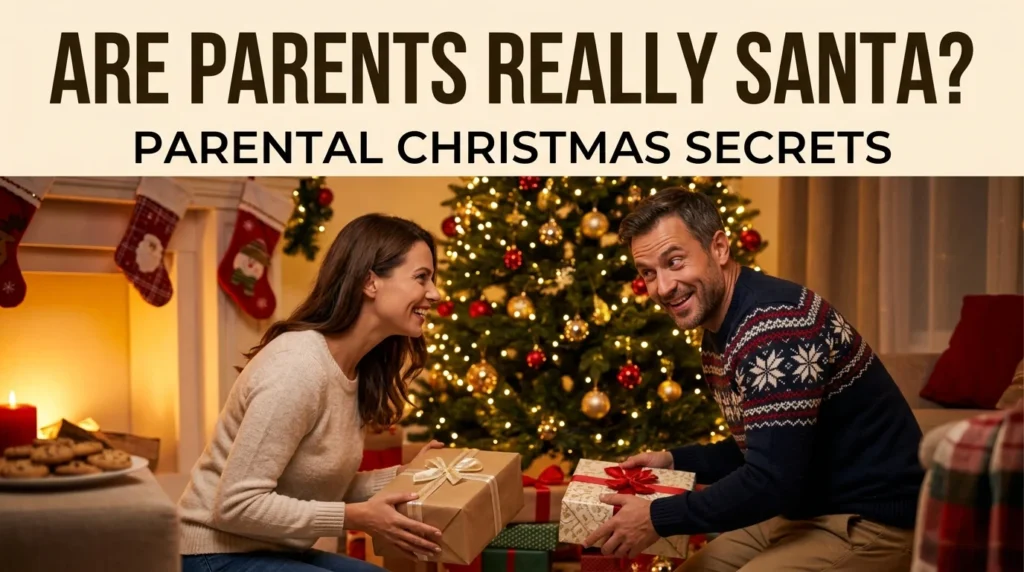
In many families, parents are the people who make the Santa tradition happen behind the scenes.
They may:
- Purchase Christmas presents
- Wrap and hide gifts
- Put presents under the tree
- Write Santa’s notes
- Eat the cookies left for Santa
- Arrange stockings
- Create Santa-related family traditions
However, not every family celebrates Santa in the same way. Some families treat Santa as make-believe, some present him as a Christmas tradition, and others do not include Santa at all. There is no single approach that every family follows.
Why Do Parents Tell Children About Santa?
For many parents, Santa is part of the fun and imagination of childhood.
The tradition can encourage children to think about generosity, kindness, giving, and holiday excitement. Some parents also enjoy creating memorable family rituals around Christmas.
Experts note that families can preserve the positive parts of the Santa tradition even after children understand that the traditional story is fictional. Santa can become a symbol of generosity and the joy of giving.
When Do Children Start Questioning Santa?
There is no universal age when children stop believing in Santa.
Children may begin questioning the story after noticing inconsistencies, talking with friends, learning more about how gifts are purchased, or simply developing stronger reasoning skills. Some children question Santa early, while others continue enjoying the tradition for several more years.
The important thing is to pay attention to the individual child’s questions rather than assuming there is a particular age when every child should receive the same answer.
How Should Parents Answer “Is Santa Real?”
A helpful first step is to ask the child what they already think.
For example:
“What makes you think Santa might not be real?”
This gives the child an opportunity to explain their reasoning.
If they seem ready for the truth, parents can explain that Santa is a beloved Christmas story and tradition, while the people giving the gifts are often parents, relatives, or other loved ones.
A simple explanation might be:
“Santa is a special Christmas tradition. The real people who love you help make the magic happen.”
This approach can acknowledge the truth without dismissing the child’s feelings about the tradition.
Should You Tell a Child Santa Is Not Real?
There is no single answer that works for every family.
Some parents prefer to explain from the beginning that Santa is a fictional character. Others enjoy participating in the tradition and allow children to believe in Santa while they are young.
When a child directly asks a serious question, experts commonly recommend responding according to the child’s maturity and curiosity rather than trying to force a particular approach.
The goal should be to maintain an open conversation so the child feels comfortable asking questions.
Improve your grammar by recognizing when to choose Toward vs. Towards in everyday writing and conversation.
“Is Santa Real or Is It Your Parents?” Examples
Here are some natural examples of the question and possible answers.
Example 1:
Child: “Is Santa real or is it my parents?”
Answer: “Santa is a Christmas tradition, and parents often help make the tradition happen by giving the presents.”
Example 2:
Child: “Do you buy my presents from Santa?”
Answer: “Many of the presents you receive are chosen and bought by people who love you. Santa is part of the story we use to celebrate giving.”
Example 3:
Child: “Does Santa really live at the North Pole?”
Answer: “The North Pole Santa is part of the Christmas story. The story comes from traditions that have developed over many years.”
Example 4:
Child: “Was Santa ever a real person?”
Answer: “The Santa story is connected to Saint Nicholas, a historical Christian bishop remembered for generosity. The modern Santa is a character that developed from traditions and stories about him and others.”
Santa Claus vs. Saint Nicholas
| Santa Claus | Saint Nicholas |
| Legendary Christmas character | Historical Christian bishop |
| Associated with Christmas Eve | Associated historically with Christian traditions |
| Known for delivering presents | Remembered for generosity |
| Usually shown with a red suit and reindeer | Lived centuries ago |
| Part of modern Christmas folklore | One of the figures connected to Santa’s origins |
It is important not to treat the two as exactly the same person. The modern Santa Claus is a character shaped by many traditions, while Saint Nicholas refers to the historical figure from whom some Santa traditions developed.
What Is the Difference Between Santa and Parents?
The main difference is that Santa is the fictional or legendary character in the Christmas tradition, while parents and other family members may be the real people who purchase and give the presents.
Santa represents the story and tradition. Parents, relatives, and caregivers may provide the real-world actions behind that tradition.
This is why the answer to “Is Santa real or is it your parents?” is not necessarily as simple as choosing one or the other. A family can enjoy Santa as a tradition while also recognizing that real people make the celebration possible.
Summary
Is Santa real or is it your parents? The modern Santa Claus who magically delivers presents around the world is a legendary Christmas character rather than a single real person. However, the tradition has historical connections to Saint Nicholas, a Christian bishop remembered for generosity and secret gift-giving.
In many families, parents or other loved ones are responsible for buying and placing the presents associated with Santa. Families can choose different ways to explain the tradition, depending on their values and the child’s age and curiosity.
Is Santa Claus a real person?
The modern Santa Claus is not a real person who flies around the world delivering presents. He is a legendary character connected to traditions surrounding Saint Nicholas and other Christmas folklore.
Are parents Santa Claus?
In many families, parents are the people who buy, wrap, and place the gifts attributed to Santa. However, each family handles the Santa tradition differently.
Was Saint Nicholas real?
Saint Nicholas is generally regarded as a historical Christian bishop associated with Myra. Many stories and traditions about his generosity contributed to the development of Santa Claus.
Does Santa live at the North Pole?
The North Pole home of Santa is part of modern Christmas folklore. It is not the historical home of a real Santa Claus.
Why do parents pretend to be Santa?
Many parents participate in the Santa tradition because they enjoy creating a sense of imagination, excitement, generosity, and holiday magic for their children.
What should I say when my child asks if Santa is real?
Ask what they already think and listen to their reasoning. If they appear ready for the truth, explain that Santa is a Christmas tradition and that real people help create the experience.
What age do kids stop believing in Santa?
There is no exact age. Children develop at different rates, and their belief may change gradually as they become more curious and start questioning how the Santa story works.
Is it wrong to let children believe in Santa?
Families have different views. Some consider Santa an enjoyable form of childhood make-believe, while others prefer to explain the tradition as fictional from the beginning.
Is Santa based on a true story?
The Santa tradition has historical roots connected to Saint Nicholas, but the modern Santa character combines historical traditions, folklore, stories, and cultural developments.
What does Santa symbolize?
Santa commonly symbolizes generosity, kindness, gift-giving, imagination, and the joyful traditions associated with Christmas.
Grace Holloway is a Creative Learning Designer with more than 9 years of experience producing visually engaging educational resources for preschool and kindergarten children. She specializes in combining educational principles with creative design to develop worksheets that encourage learning through play, exploration, and creativity.